My first introduction to William T. Vollmann came in an interview in BookForum about five or six years ago. I was intrigued, and decided to start with the then recently published Expelled from Eden, which collects excerpts from all of his novels, as well as essays, journalism, interviews, and letters, providing a window into Vollmann's voice, style, and breadth of work. I'm not sure I read the whole thing (certainly not straight through), rather leafing through it, reading bits of it here and there. Since then I've endured a number of his books (I think endured is the right word--while beautifully written, the subject matter is often bleak and horrific) and intend to read more. Eventually. I haven't worked up the nerve to tackle Imperial yet (1,200 pages about the California county right on the Mexican border) but I'll get there.
The Lime Twig is a surreal, avant-garde novel melded with pulp crime fiction. (Many a review describes it as something like Dick Francis meets David Lynch.) The basic story—a race horse heist gone horribly wrong—is told in nightmarish, impressionistic sequences. The cover of the book, featuring a grainy, blurry mess of images that only come into focus when you really concentrate, is a pretty apt translation of my experience of the book.
I can't remember how exactly I first came across John Hawkes—in some chain of online links—but only a couple weeks later I found a copy of The Lime Twig in a used bookstore and excitedly picked it up, thinking it a nice coincidence. As I was paying for the books, the store owner stopped at The Lime Twig and got a funny smile on her face as she explained that John Hawkes had been her college writing teacher (which explains why the book was prominently displayed on the wall). I'm not really sure of the point of that story but it's what I remember most about the book when I see it.
Originally published in 1991 as a private printing of 300 collectors' copies and 26 leather-bound presentation copies, Screw-Jack was published for the general public in 2000. It's a short little book, consisting of three short stories, including a stream-of-consciousness chronicle of Thompson's first mescaline experience in 1969 and a demented love story ostensibly written by Thompson's alter ego Raoul Duke. It might not be Fear and Loathing good, but it's pretty good nonetheless. I love the cover, with the giant letters reminiscent of antique wood type.
While perhaps best known for writing screenplays (Dr. Strangelove, Easy Rider, Casino Royale, etc), Terry Southern wrote several novels and essays. In the 50s he hung around in New York with the likes of Robert Frank, Larry Rivers, Gregory Corso, Allen Ginsberg, and so on. During that time he wrote a short story "about a girl in Greenwich Village who got involved with a hunchback because she was such a good Samaritan" (that particular description of it comes from this interview). Several people, including the poet Mason Hoffenberg, felt this girl should have more adventures, and the two began writing alternating chapters that grew into the novel Candy.
Reading a novel by Eileen Myles is always a bit of a confusing experience for me, as she tends to write them from the perspective of a character named Eileen Myles, who, much like the author Eileen Myles, grew up in Boston, moved to New York in the '70s, and became a lesbian poet. So it's a novel--which, by definition, is fictional--in which the main character is the author. Or maybe not."Loosely, Inferno tells the story of Myles, who left Arlington, Massachusetts, where everyone "lived in a roughly catholic world," to make her way as a writer in New York City. As the title suggests, the book owes something to Dante's Divine Comedy. Instead of a dark wood, though, we start out in a college lit class learning Pirandello from a woman with a beautiful ass, "perfect and full," and from there the tour—gossipy, funny, crass, earnest—continues.
Hell is scraping to pay the rent, working as a bouncer at a bar up by Columbia where you can still feel the aura of '68. It's being trained to give handjobs at a massage parlor. It's "inspecting lesbians because I was pretty sure I was going to be one. But I wanted to be a poet first." Purgatory is taking speed and working for James Schuyler. (See Myles's 1994 Chelsea Girls for more on both.) It's Deleuze's Masochism, grant applications, and a dog named Rosie. It's when "I didn't look like a woman or a man and didn't live here or anywhere." A clash with Amiri Baraka. A crush on Nan Goldin. St. Mark's Poetry Project. Touring Germany with Sylvère Lotringer and other Semiotext(e) writers, getting upstaged by Kathy Acker, peeing on Goethe's lawn.
Heaven, though, is Alice Notley and Ted Berrigan's kitchen. It's roaming the city with flyers for poetry readings. It's sex in a tent in a loft. René Ricard buzzing your apartment in the middle of the day...The prose often goes loose and raggedy, yet it always stays in focus. It's a novel in the way Elizabeth Hardwick's Sleepless Nights and Renata Adler's Speedboat are—that is to say, on its own terms."
A novel on its own terms. I think that's a pretty good way of characterizing what I was getting at at the beginning of this post.
Also, I feel the need to mention that you can actually choose between two different covers for this book. It's an interesting idea--and I'm glad that I got to choose this one, as I really did not care for the other one--but at the same time, I kind of think a book should have one cover. Or, since publishers are always repackaging books, at least one cover at a time. (Actually, I guess I should say one American cover at a time, as almost always the international editions of a book will be published with different covers.) A book cover is so visually defining, and I like the idea of the cover art being really iconic and in a way contributing to the book's identity. Which I guess must be a scary thought for the writer.
Just finished watching the movie version of this book and I feel a little nauseous. I mean holy shit. This is a portrait of the depths of human misery, of a lonely old woman's addiction to diet pills, fueled by an obsession with being on television, and her junkie son, who's convinced that if he can acquire a "pound of pure," all his troubles will be over. It does not end well.
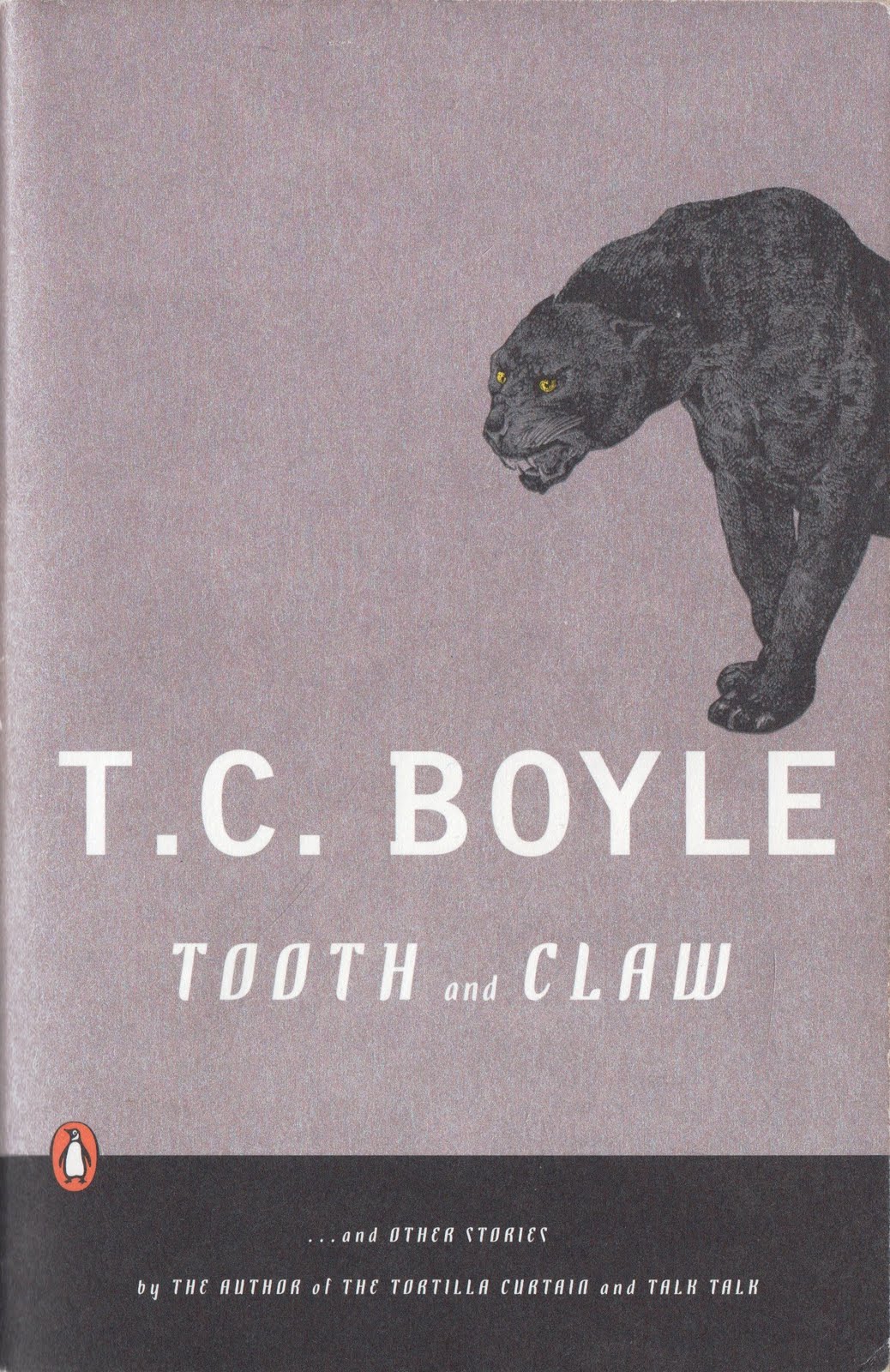
This is the very first book I found on a "take shelf" when I started working at Penguin and I remember it was so exciting to just be able to take a free book. I'd read the title story in The New Yorker, as well as one other short story ("The Hector Quesadilla Story," from the Paris Review anthology), but otherwise it was my first introduction to Boyle's work, which often incorporates elements of satire and magical realism. "Hector Quesadilla" stands out in my mind as the stronger and more memorable work, so I think I might have to try Boyle's 1985 short story collection, "Greasy Lake & Other Stories," in which that one appears.
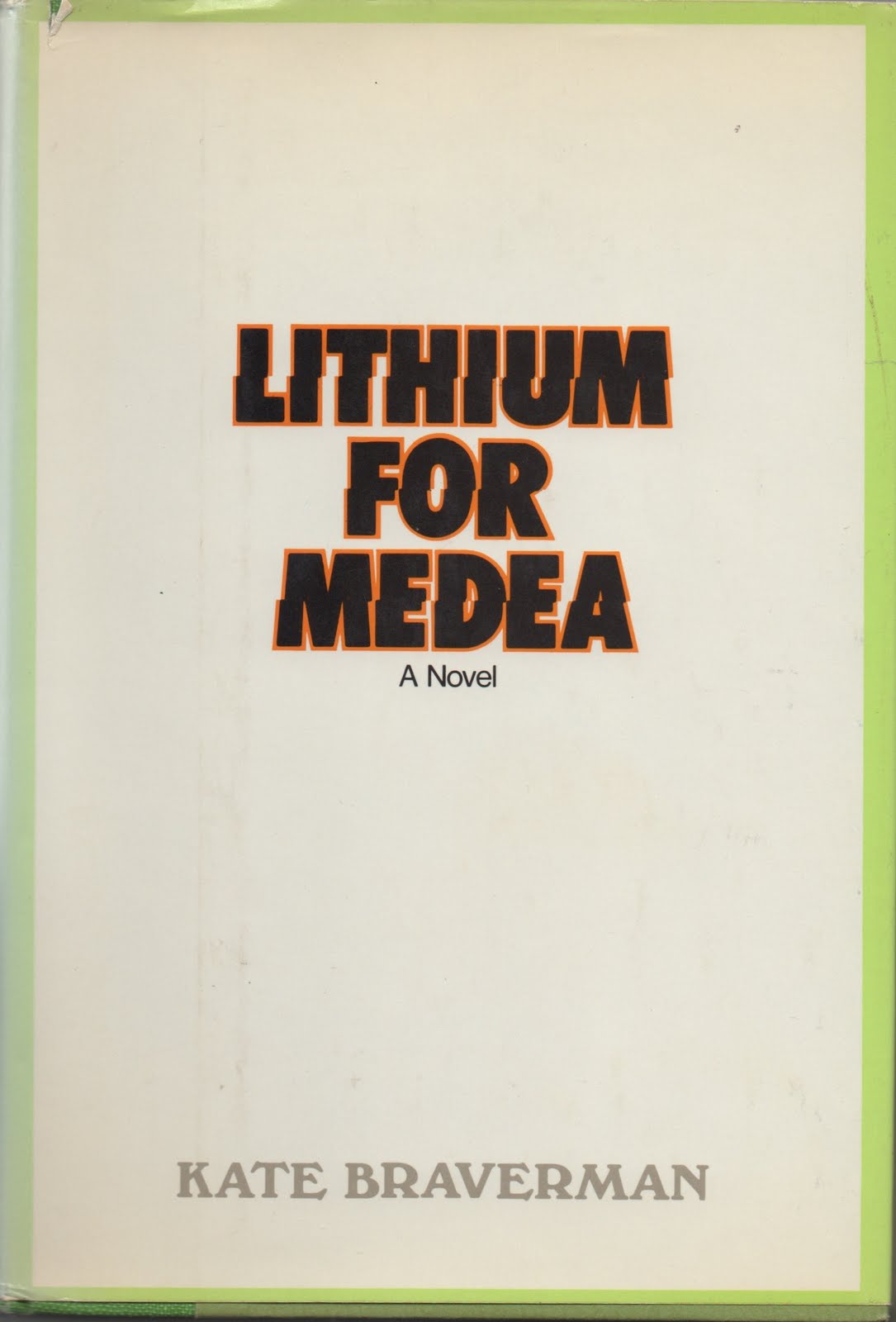
Here's another author I was introduced to by a college teacher, through a few photocopied short stories distributed in a class. I decided to check out Braverman's first novel, a tale of addiction, unhappy relationships, and dysfunctional families in 1970s Los Angeles. At the time it was out of print (it's since been reissued), but I found this first edition copy online somewhere. The cover seems weirdly minimalist, though maybe that was the design trend at the time. (I do like the type treatment, but not the font of the author's name.)
A very young photo of the author on the back.
I was tipped off to John Fante by a teacher who said if I liked Bukowski I'd be into Fante, who was an influence on the former. That and the 1930s-'40s Los Angeles setting was enough to convince me to give him a try. The Road to Los Angeles was the first book of his that I read, and it was also the first book that Fante wrote. Much like Buk's Henry Chinaski, Fante's fictional alter ego was Arturo Bandini, a character he returned to many times throughout this novels. The Road to Los Angeles introduces Bandini as a young man struggling to become a great writer as he works odd jobs to make ends meet. It's not Fante's best but as I said, it was his earliest novel, written when he was 24 years old, with far better things to come.

I first heard of Fielding Dawson in an article about him in The Believer a few years ago, which definitely got me interested. A beat-era writer and painter, he studied at Black Mountain College and hung around with Franz Kline and Philip Guston. (A favorite detail about him is that he pitched for the Max's Kansas City softball team. I especially love that there was a Max's Kansas City softball team at all.)
Dawson was also a painter and collagist, and there are many photographs and collages scattered throughout the pages of this book, as well as on the front cover.
This is Jesse Ball's second novel. I read his first book, Samedi the Deafness, simply because I liked the cover art, but was pleased to find that I enjoyed the story as well. The Way through Doors also has a lovely cover--the rectangle within a rectangle within a rectangle, the words of the title cut in half, aptly symbolize the structure of the novel itself.
Harry "Rabbit" Angstrom was a star high school basketball player, which was pretty much the highlight of his life. It's all been downhill from there. Now he's a little older, and his job and marriage are miserable and unfulfilling. One day on a whim he gets in his car and keeps driving. Except then he turns right back, but instead of going home shacks up with someone else for a few months, while a priest keeps trying to get him to reconcile with his pitiful wife.
By the way, I had no idea this had been made into a movie. Starring James Caan, no less!
This is David Foster Wallace's debut novel, which takes place in 1990 in an alternate Cleveland, OH. At some point in the past, the government decided that Ohioans would benefit from having a desert--a place to wander alone and reflect, free of shopping malls and civilization--and so they engineered the Great Ohio Desert, or G.O.D.
The Petting Zoo, which was released just last month, is Jim Carroll's first and last novel. He's of course published many volumes of poetry and two collections of his journals--the famous Basketball Diaries and the perhaps lesser known Forced Entries (I actually prefer the latter one). He died a little over a year ago, after turning in a draft and revising the first two parts of The Petting Zoo. A literary scholar was able to finish revising the novel based on Jim's detailed notes.
The protagonist, Billy Wolfram, is a painter who has achieved a high level of wealth and celebrity in the 1980s New York art world. Some say he's essentially a version of Jim Carroll without the sex, drugs, and rock n roll. Yes, Wolfram is a hugely successful artist...and a 38 year-old virgin, due to unresolved sexual neuroses dating back to his mother walking in on him during his first and only attempt at jerking off. (I've purposely left out a few amusing details...you'll have to read it to find out the rest.)
I read this book for my high school AP English class. We also read Beloved by Toni Morrison, and afterwards the teacher asked us to write a paper on which one we liked better and why. Which seems a little odd. But the point is that I was only one of two people in the class who preferred The Sound and the Fury, which I find kind of interesting.
Not too long ago I read Rick Moody's latest novel, The Four Fingers of Death, and I wasn't all that crazy about it. It's ambitious, for sure--three novels in one, using satire and humor to explore themes of ennui and interpersonal relationships (in this case, on the planet Mars), but it just didn't do anything for me. I can't really say why. Helpful, I know. But I loved his earlier work when I first read it--for instance, this collection of short stories, Demonology, which I remember first reading and wanting to do that. One of my favorites in this volume is "Wilkie Fahnstock: The Boxed Set," in which the story of a man's life is told as a series of music tracks and accompanying liner notes. ("Tragedy struck in 1970, when Elise Fahnstock's marriage to Stannard Buchanan Fahnstock ended in acrimonious divorce--to the sounds of Simon and Garfunkel's Bridge Over Troubled Water.") It's a pretty good mix.
At one time I really wanted to write like this--sparse, economical, and evocative, chilling in its ability to communicate what is just below the surface without actually saying it. In the critical introduction to my senior thesis (hilarious that such a thing exists) I named Carver as one of my primary influences, along with Mary Gaitskill, Amy Hempel, and James Salter (I had to dig it out of a filing cabinet to confirm this; I also praised Carver for the lyrical effect of his dialogue). Nowadays I'm more of a surrealist crime fiction kind of a girl, so it just goes to show you how much your tastes continue to change.